Saturday, October 29, 2011

The Camping Trip

By Keith N Fisher

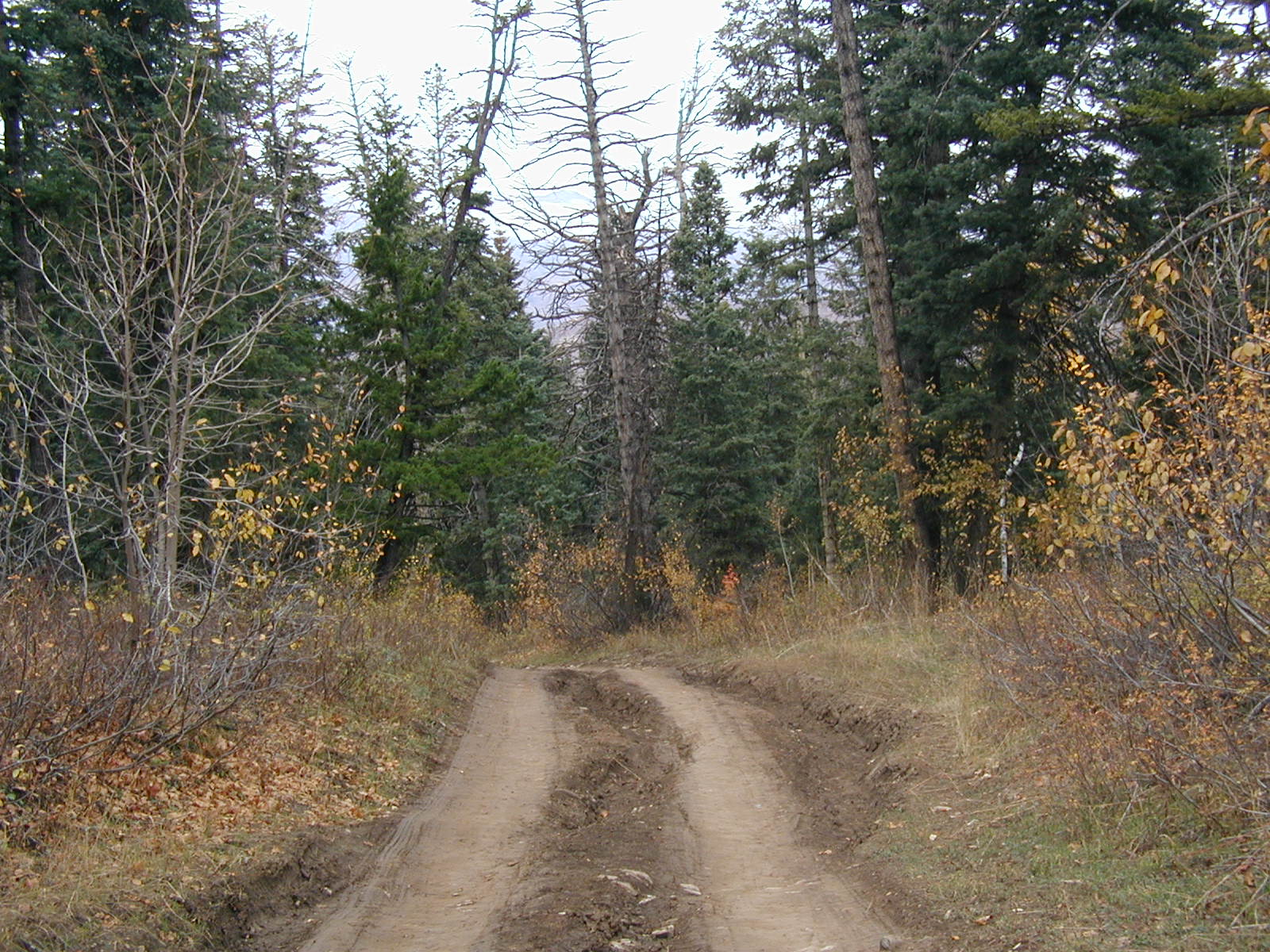
Last week, I went camping and re-posted a blog talking about another trip. I’m happy to report the writer’s block I experienced then, didn’t happen this time. I woke up in the middle of the night and wrote the final scene for my work in progress.

It’s interesting to sit in a truck on an almost moonless night and write by the light of your laptop. I’m large enough that my computer sits perfectly between my chest and the steering wheel. I took off my glasses and visited with my character.

On another day, I worked on a new project and did some editing. I got so caught up that my brother knocked on the door and scared my pants off, asking if we were going hunting. I discovered my laptop makes a good flashlight in order to see who is interrupting me.

I learned a few things on the trip this year. One, is that its possible to put your underwear on backwards in the dark while trying to not wake anybody up. I also learned that it’s very cold standing behind bushes and under trees, trying to turn your underwear around.

Later, I learned my cousin has become an avid reader. He stumbled across a book by Nora Roberts while waiting for somebody, and now he reads almost everything he can find. He’s going to be a beta reader for me.

I became reacquainted with the concept of gazing into a campfire and contemplating the deeper meaning of life or the next plot turn. I drank hot chocolate and wrote well, better than I used to. I also put in some hunting time.

It was a having a good time away from real life, wish you were here, kind of weekend. Wish you could’ve been there. Good luck with your writing—see you next week.


Saturday, October 22, 2011

Re-Posting From the Archive

By Keith N Fisher

I’m going camping and I won’t be here on Saturday. Also, things are hectic right now, so I decided to re-post an article from 2006. I’m not sure if this will appear on time, but if not I’ll be late. I did a little editing because I’m a better writer now. I hope you like it. I’ll see you when I come down from the mountain.


Writers Block at 9,000 Feet

By Keith Fisher

I couldn’t bring my computer. Well, I guess I could’ve but I’m one of those who didn’t know you should remove the battery from a laptop while on house current so it only lasts about 50 minutes. Because of my daily writing habit I wondered if I would go crazy without my electronic crutch.

In an attempt at appeasement, I brought a wire bound notebook. I figured I could at least, make notes of the ideas I might have. I had a priesthood lesson to plan anyway.

My brother had a different kind of hunting permit than I did, but I didn’t want him to go alone, so I went camping. As it turned out, my dad went too, but he stayed in his trailer with my brother. So, I had a lot of alone time in mine. During the day, I got to shoot the bull with my dad. We solved the problems of the world, and my brother went hunting.

Have you ever tried to concentrate on a plot while chatting with someone? I put down my notebook and talked. I didn’t get my writing done.

After we ate the Dutch oven food I cooked, and we said good night I went into the trailer and opened my notebook. Nothing happened. I tried to make notes for my lesson but I couldn’t keep my mind on it.

I realized if I had a generator, I could’ve brought my computer. At least I could Edit, or watch a DVD. What do you do when you’re camped at 9,000 feet during your writing time and nothing comes to mind? Did I mention I was alone in a camp trailer? No distractions, what a great set up. I was having the weekend that most writers can only dream about, but my mind wasn’t co-operating. What would you do? I gave up.

I finally decided to go to bed, thinking I would at least get some sleep. Well, that was the plan, anyway. I began to obsess over a dry throat and dust in the furnace. I didn't want to wake up with a cold. Perhaps a little hot chocolate, I thought.

When my hot drink was ready, I sat down and thumbed through previous notes made in my notebook. It got me thinking about the characters in a different book than the one I was working on. Suddenly, and without forethought, I was writing again. I still missed my computer screen, but the notebook was working fine.

Three cups of hot chocolate and four hours later, I decided that I’d better go to bed. I was happy when my head hit the pillow. I forgot about the dust in the furnace while I dreamed about plot lines.

I spent the rest of the weekend writing the story I never intended to work on. I learned to be flexible with my writing time. I also learned that even though it sounds crazy, characters are like children. If you pay attention to one, the other will get jealous and try to take center stage. If I listen, perhaps my writing will turn out better.

I’d forgotten the joy of quietly putting ink on paper. It was nice to reacquaint myself. Although, reading what I wrote, is another matter.


As I said, this blog was written in October of 2006. That was three laptop batteries ago. I now have a cigarette lighter cord for my computer, and I take a notebook.

There are several projects percolating in my brain in case of writer’s block. I’m also writing a cookbook, so my camp kitchen is packed and ready. I’ll see you when I get back.

Good luck with your writing—see you next week.


Saturday, October 15, 2011

Killing the Independents

By Keith N Fisher

I watched a documentary on Public Television the other day. It was called, Paperback Dreams and it lamented the demise of two San Francisco Bay area book stores. Cody’s Books, in Berkely, California, and Kepler’s across the bay in Menlo Park.

The narrator talked about their beginnings and how they became Mecca for the free thinkers and counter-culture radicals of the sixties. Cody’s even served as a medical first-aid station in nineteen-sixty eight during a Telegraph Avenue anti war protest. The police & National Guard used tear gas and clubs to disperse the crowd. So, a group of former army medics who’d been in Vietnam, offered to help those who were injured.

Many famous people, writers and musicians cut their proverbial teeth in those stores. Joan Baez talked about the time she spent in Kepler’s and what she learned. Even the Grateful Dead, hung out there. Roy Kepler, the founder, used to complain that they always played the same song, and stole the ashtrays. Over the years, there have been many writers who read their work at Cody’s and Keplers and left a signed photograph for the wall. Those places were filled with literary tradition.

The show explored the different ways those two stores have struggled to survive. The economy will always be a problem for book sales, but the real threat started when reading fell victim to visual media. Book sales dropped, but the trade paperback, with the cheaper price, saved the business and gave those two stores their start. Then, came the threat from big box stores, like Walmart, Costco, and Target. They are still cutting into the market, but online, discount booksellers have devastated the industry. The latest attacks on independent bookstores have come from e-books and print on demand and it’s killing bookstores.

As writers, we selfishly plot and scheme. We look to our bottom line to find the best way to get our work published. We embrace the brave new world in our attempt to market our careers and sell books. After all, that is the point, right? Technology is the wave of the future, isn’t it? I wonder how many of us consider what the brave new world is doing to the independent bookstore.

We search for places to launch our books and moan the loss of independents, but forget to patronize those stores during the rest of the year. We buy each other’s books online and as e-books. Who can afford to do otherwise?

During the closing of one of the stores in the documentary, one of the customers claimed she used to come into the store three times a week. In a private response, the owner of the store wondered, if that were true, where were the sales? It’s the bottom line that closed the store.

With the routine closing of independents and now, national chains, like Borders, we are losing a way of life. The exchange of ideas and independent thought of the sixties are gone. Meeting at Borders for a cappuccino and a quiet place to write is going away, too. Did you ever walk into a small bookstore and breathe in the aroma of freshly printed books? You won’t get that at Amazon. Well, the warehouse workers might, but thumbing the pages and fingering the spine is impossible with e-books.

With the loss of independent booksellers, our world is changing.

I’ve lamented the coming of E-books and print on demand before. I certainly don’t want to harp on something that is inevitable. I just wish we could hold-on to the better parts of our society.

Good luck with your writing—see you next week.

Saturday, October 8, 2011

Looking Literary

By Keith N Fisher

I attended the Book Academy this week. It’s a one-day conference put on by the UVU Continuing Education Department. There were four breakout sessions, a panel of book reviewers, book signings, and Dan Wells was the keynote speaker. Breakfast was great and lunch was delicious. I’ve attended for three years now, and I’m still impressed.

Anyway, I sat in the ballroom getting ready to eat and someone joined me. We talked about writing and whether I was published yet or not. The man told me I look like an author. When I asked why, the subject of my beard and long hair came up.

Hmm. I didn’t know I was unkempt in order to look literary. I thought it was because I work at night and haven’t been able to connect with my barber. I had been self-conscious since I would be talking with Kirk Shaw from Covenant. I didn’t want to make a poor impression since I’m waiting to hear from them about one of my manuscripts. Now, whenever I look at myself in the mirror, I see Hemmingway or Vonnegut. I might have something here. Do you think I could be a famous author just by looking like Walt Whitman?

No, I write LDS fiction so, don’t think it’ll work. Maybe, it’s national market time? Maybe, it’s easier to just get my haircut and beard trimmed.

I learned some things at the conference and met some new friends. It’s surprising that more people don’t attend. Many of those I see at Storymakers would also love this one. Mark it on your calendar for next year. Jessica Day George will be the keynote speaker.

Good luck with your writing—see you next week.

Friday, October 7, 2011

Fall

A blog tour book review by Keith N Fisher

Did you ever have one of those nagging feelings that won’t let you go? A feeling like you’re forgetting something, but you can’t quite remember what? I knew I had to get this review posted soon, but I wasn’t sure what day it was due.

Now I’m late, and people are going to think I’m unreliable. I’m really not you know. I’m the one who shows up for everything at least fifteen minutes early. Nothing left to do, than to say I’m sorry and move forward with my review.

I met the author, Jennifer Hurst, at the August Authorama this year. I was cooking in Dutch ovens and she was applying her talent of face painting. She’s a talented artist and although I didn’t know it at the time, she’s also an author.

Being asked to review her new book Fall, is an honor. The book was a refreshing story that deals with issues as old as time. Without beating about the bush, I must admit, at first, I found it hard to love the protagonist, Julia, because of her propensity toward typical airhead behavior.

She’s a woman manager and general foreman of a construction project. At one point she gets her high heel stuck in a hole between floorboards, (big surprise, huh?).

Julia, JD for short, wants to be taken seriously as the boss in a typically man’s occupation, but she insists on dressing in clothes that point out the differences between them.

I realize the author is trying to make a point in making her that way, but it was hard for me to read.

Eventually, I learned to like her, and the plot turns out okay. I don’t want to spoil it for you, so I won’t give you too much information. Get a copy and read it, but be warned there are demons in this story.

This book is self-published so don’t look for it in the obvious places. You will find it through the author and tell her I sent you. Or, go to amazon. its also available for Kindle

Saturday, October 1, 2011

Do It Yourself, Or . . .

By Keith N Fisher

When I started writing, I noticed a few ads in trade magazines for what we called vanity presses. There was even one company named Vanity Press. They offered writers an opportunity to see their book in print. There was a minimum order. So, it cost a small fortune. It was, however, a way of getting your work out, even after rejection by a publishing house.

Also, there was subsidized publishing which gave an author the prestige of having a publisher at a price. You could see your book printed if you paid a percentage of the cost. Book sales with a vanity press were entirely dependent upon the author. Subsidized publishers offered some service, but the author shouldered most of the sales burden.

Many fiction authors who went those routes never quite recovered from the stigma. Some rose from it and became superstars in their own right. The difference was in the quality of writing. Most of the poorly written books still inhabit shelves in the libraries of family members and relatives. A lot, are taking up space in the writer’s garage. Some get passed around at yard sales, year after year.

Now we live in a print on demand world. E-books have invaded the market and new books are coming from everywhere. Many, first-time authors are doing it themselves. It’s cheaper and easier then ever before. Sales still depend on the author, but the stigma of vanity seems to have disappeared.

Does do it yourself sound like a win/win situation? Personally, I like the idea of having a publisher. If for nothing else, it says my work is good enough, and there are down sides to self-publishing.

In the LDS market specifically, getting a contract from a publishing house hasn’t changed much. I need to submit a clean manuscript. If there are too many problems, it won’t be accepted. The days of mediocrity, however, are gone. Writers have raised the bar. The old stereotypes have fallen. Readers are taking notice.

The beauties of being accepted by a publisher are myriad. Most important is the editor assigned to your project. In the interest of delivering the best possible product, the editor finds errors for you to fix. There is no editor in self-publishing.

Many writers slave over rewrites until they’re sure the manuscript is perfect, but they don’t have the resource of good friends in the business. Friends who could read through and catch errors before its published.

I’ve been blessed with the opportunity to do blog reviews. I get to read some of those self-published books, along with those from publishing houses. Many of the self-published ones could’ve benefited from the services of an editor.

I think that many writers finish a story and hurry to publish. They’re probably sick of reading through the manuscript so, they rush to get it out there. Some times they forget about that spot they were going to fix but never did. The book goes to press. The flaws are still there. The writer gets a bad reputation, and the market suffers.

In the past, because of a mediocre product, many readers wouldn’t read LDS market books. Now, because of impatience, some of the self-published books on the market are returning us to those days.

I don’t mean to imply that all self-published books are badly written. In fact, most of them are fine. Even those who could use an editor are good. They just need a little more polish. A line and content editor would help immensely.

The lesson is clear. Slow down and make sure its perfect before you publish. Look at logistics. Don’t have your character see something that doesn’t exist in the place you have written them into. Use a good friend or hire an editor. At the very least, it gives you someone to blame for that typo on page forty three. You know the one that makes you look like a four-year old author?

I have a friend who can open a book to the middle and tell if it was self-published without looking at the cover, or reading a word. The word wrap and layout are important. Don’t get sucked into thinking it doesn’t matter, because the point is quality, right?

Keep in mind you have to sell your book. There are marketers you can hire, but it still takes work and you won’t have a publisher to help you. If, after all, you sell a few books, wouldn’t piece of mind be preferable to always remembering the mistakes you made? Don’t give your customers a reason to pass you over when its a choice between your second book or . . .

As for me, I want a publisher. I think I have a lot to offer. I think we can work well together. Did I mention I cook in Dutch ovens? Just think of the great company Christmas parties in the publishing house. Hint. Hint.

Anyway, good luck with your writing—see you next week.

Saturday, September 24, 2011

The Brick Joke


By Keith N Fisher

Many years ago, while driving a produce truck, I heard an obscure joke I never forgot. Subsequently, I’ve told it many times with varied results. It’s not very funny, but it’s cute. I’m not sure who wrote it, but here it goes. Be sure to read all the way through, because I’m going to make a point about writing.

Once, there was a man named George. He wanted to build a brick barbecue. He made plans, and calculated exactly how many bricks he would need. Then, he marched into the home improvement store and asked for seventy-one bricks. The clerk told him that like doughnuts, the bricks he wanted were packaged in dozens.

“But I don’t want seventy-two bricks,” George said. “What would I do with the other brick?”

The clerk responded with, “I don’t know. Perhaps you could use it as a door stop?”

George shook his head and went to the mercantile. He was told the same thing but since they were a wholesale business, he would only be able to get them by the pallet.

“How many would that be?” George asked.

“Ninety-six. The counter man said.

George did the math in his head “Then I would have twenty-four bricks left over.”

“Yeah but you would get the wholesale price.”

George decided to go to the brick plant.

“That’s correct. There are ninety six bricks on each pallet.” The yardman said. “But we discount each pallet after the first one. The more you buy the cheaper it is.”

“So I can get a really good deal if I want to build five barbecues. But that would leave me with fifteen bricks. Can’t you just break up a pallet?”

The yardman shook his head.

Finally, George relented, went back to the home improvement store, and purchased seventy-two bricks. He had a wonderful time building his barbecue and sure enough, he had one brick left over. George stood there looking around, wondering what to do with the brick. Suddenly his blood pressure shot through the roof and do you know what he did with that brick?

?????????

He tossed into the air as hard as he could.

Okay, Okay, I told you it wasn’t very funny.

On that same afternoon in the produce truck, my friend told me another joke,

Back in the days of designated smoking areas on commercial airplanes, a woman named Jenny tried to get a non-smoking ticket of a commuter flight. She was told there were no more seats in that section and if she wanted to get on the plane she would need to sit with the smokers.

“I can’t do that,” Jenny complained. I can’t stand it, besides my dog is allergic.”

“Well, if you want, we can check the dog as baggage,” the ticket agent said.

“Not Fifi. She’s like a family member.” Jenny said.

“I’m sorry ma’am. You could wait until the next flight.”

“When would that be?” Jenny asked.

“Tomorrow morning.”

Jenny paced the ticket area and finally decided on a plan. It was a short flight and perhaps she could appeal to the kindness of her seatmates. She purchased the ticket.

Boarding early, Jenny found her seat on the aisle, over the wing and sat down with Fifi in her lap. Soon, a burley businessman with an unlit cigar in his mouth, sat next to her. Jenny introduced herself and Fifi.

“My name is Dave,” he said.

Contrary to Jenny’s nature, she chatted with Dave about their reasons for being on the plane and when the plane started down the runway, she assumed his sympathies were with her.

Soon they were in the air and some of the passengers began to light up. Jenny complained to Dave about her aversion and Fifi’s allergies. Dave raised a lighter to his cigar, glanced at her, and put his cigar away.

After a while, Dave fidgeted, and reached for his cigar. Jenny sighed.

“Don’t worry. Since this plane isn’t pressurized, I can open this window. I’ll blow my smoke outside,” Dave said.

Jenny relented, knowing Dave was actually trying to work with her, but the window blew Dave’s smoke right toward her. She coughed and Dave snuffed out the cigar.

Still more time passed and Dave lit his cigar again. This time, Fifi started sneezing. When Jenny complained, Dave said, “Look. I love this cigar about as much as you love that dog. I’ll make a deal with you.” Dave pointed out the window. “I’ll toss my cigar out the window if you toss your dog.”

“Don’t be stupid,” Jenny said. “I can’t do that to Fifi.”

Dave nodded his head in self-righteousness.

Before long Fifi was gasping for breath and Jenny had an idea. “We could switch seats.”

Dave huffed and climbed over her to stand in the aisle. Jenny slid across and took a deep breath of fresh air. She put Fifi on the ledge and encouraged her to breathe. “Thank you, Dave,” Jenny turned to him and said. Seconds later, the unthinkable happened. Fifi climbed out the window.

Jenny was inconsolable. Dave reached over and dropped his cigar out the window in a symbolic gesture but Jenny didn’t care. How would she ever be able to go on without Fifi?

After a while, the plane had grown quiet except for Jenny’s sobs. All the smokers had extinguished their cigarettes and Jenny glanced out the window toward the wing. Do you know what she saw?

???????

Was the Dog sitting on the wing, smoking the cigar?

?????

Nope. With wide-eyed amazement, Jenny looked and saw the brick . . .


If I hadn’t been driving a produce truck between Salt Lake and Provo, I don’t think I would’ve enjoyed this two-part joke. I was sequestered and bored, besides, my friend told it much, better than I can. The trick is in the timing and acting oblivious to the fact the first part is stupid, while keeping their attention in the second part. Never the less, the responses when I tell it, surprise me sometimes.

Recently, in critique group we addressed the problem of a book that reads like two different stories in the same story. There is the first part, which doesn’t appear to relate the second part, and seems like an entirely different book. In the end, however, both parts come together.

A suggestion was made to publish it as a two-part story. Other than connectivity, it’s a great piece of writing, but I’m a little unsure about the two-part idea. As writers we often write sequels but if we are good writers each story will be stand alone, not dependent on the other.

In a two-part the writer is obligated to make the first part exciting enough to carry the reader into the second book. Then if the second part lets them down, the reader will never forget that. When I tell the brick joke, it causes serious doubts about my joke telling abilities.

There is also the inherent danger of adding fill to a manuscript in order get the word count up for two books.

I think it would work if the parts were equally interesting. Each part needs a complete arc that provides closure for the reader. Also the first part needs a few teasers that lead the reader into the second part, then makes the reader glad he took the time to read.

If the second part of the brick joke had been funny enough, it would’ve been worth the time it took to get there. Make all your writing worth the time to get to the end.

Please forgive my stupid joke and consider, if I had posted this blog in two parts, would you have read it all? Good luck with your writing—see you next week.